


Jad Yatim
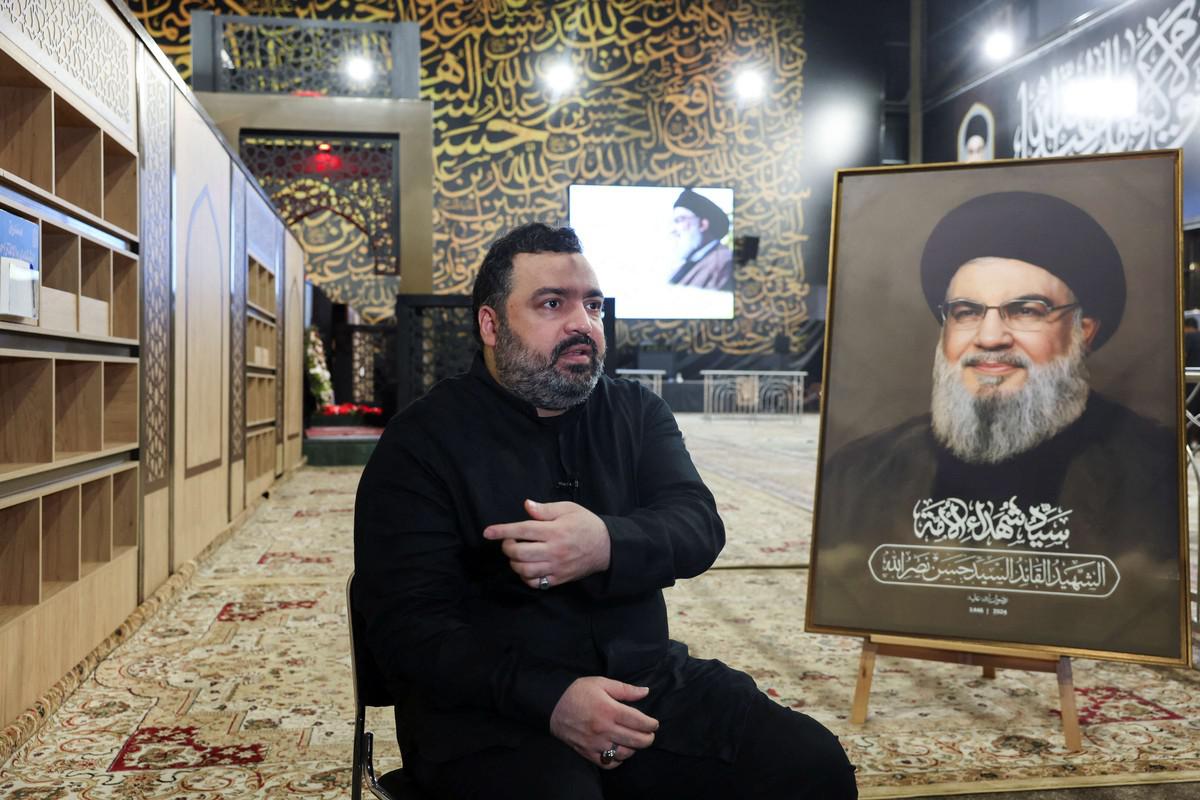
Jawad Nasrallah sits comfortably beside his father’s grave, speaking to a global news agency, “mocking” the Lebanese who have been exhausted by his father’s wars, who lost their lives, and who now wish to see an end to wars and the handing over of weapons. He says: *“Not in your dreams, nor in your illusions”*, borrowing the opening line of a Julia Boutros song titled *“Not in Your Dreams.”*
Jawad enjoys the privilege of seeking solace in his father’s grave, while hundreds of southerners are still searching for the corpses or remains of their loved ones, hoping to gather a pile of bones so that they may at least honor the martyr by building a grave they can visit.
Jawad is lucky to have his father’s grave to lean on, while hundreds of us were deprived of visiting or burying our fathers as he did, because of the massacre-war his father launched with the decision to support Gaza.
Despite all this, Jawad Nasrallah speaks to us arrogantly, as if his ability to practice the rituals of mourning for his father outweighs all of our sorrows, and we should be grateful for that—and forget the tragedies that befell us because of the so-called “War of Support,” which dragged Lebanon, and its south in particular, into a black hole.
Jawad Nasrallah was more honest when he spoke in earlier interviews about the Secretary-General of Hezbollah, calling him simply *“Baba”*—just as all of us call our fathers. But with time, he became part of the machinery of deification. And so, Jawad, our grief is no longer the same.
Or perhaps, it was never the same. Surely, it was never the same.
My father closed his eyes for the last time on the morning of September 28, and I know he never harmed anyone, let alone spilled blood.
My father was not a “god,” but he was a human being overflowing with goodness, love, and compassion. He was never part of a political party, but he raised us to be humane and Lebanese, to mend hearts rather than break them.
He dreamed of spending days with the family in our southern hometown. Many times, I missed the chance because of direct and indirect threats, and the intimidation practiced by “the party” against every southerner who differed and saw the catastrophe we were heading toward, fueled by all the power Iran could muster.
Our grief was never the same.
Yet you, Jawad—like Hezbollah—want to strip southerners and Lebanese of their right to life, to grief, and to gathering what remains of those who stood firm on their land and in their homes. They endured so we could return, not so that weapons would become more important than return and the rebuilding of our villages.
What matters to me, as to hundreds of others, is that we will no longer remain prisoners of illusory victories and of figures seeking positions within Hezbollah at the expense of the calamity that has befallen all of us as Lebanese and as southerners.
May God have mercy on your father and forgive him… and may God have mercy on my kind father.
(Source: An-Nahar)